
Team
Read more about the team and their research interests here.
|
Name |
Bio |
|---|---|
|
Professor, PhD, Project leader |
Karsten H. Jensen is project leader of the project. He is Professor in Water Resources and Hydrology at the University of Copenhagen. He has been project leader for two Danida Fellowship Center (DFC) funded projects in South Africa andone in India. His research interests include investigation sand modelling of hydrological processes at catchment scale under both temperate and semi-arid conditionsas well as hydrological impacts of climate change. Karsten H. Jensen has been the Director of the Danish Hydrological Observatory HOBE for 14 years. Karsten H. Jensen holds a MSc degree in Civil Engineering and a PhD degree in hydrology. |
|
Community Conservation Manager, WWF Uganda |
Silver James Birungi is the Community Conservation Manager at WWF-Uganda Country Office, where he leads the implementation of three conservation programmes: the Triple Benefit Project (TBP), Leading the Change II (LTC2), and Together for People and Planet (ToPP). His role focuses on delivering integrated outcomes for biodiversity conservation, climate resilience, community livelihoods and civil society partnerships and strengthening. E-mail: sbirungi@wwfuganda.org |
|
Assistant Professor, PhD |
Elisa Bjerre is an Assistant Professor in water resources at University of Copenhagen specializing in hydrological modelling for improved water resources management and climate resilience. She obtained her PhD degree atUniversity of Copenhagen in 2022 in a collaborative research project with the Geological Survey of Denmark and Greenland (GEUS). Her interdisciplinary research integrates numerical modeling, machine learning, fieldwork, remote sensing, and stakeholder involvement. She has nine years of experience in catchment modeling and has in the past three years been working in data scarce regions. |
|
Commissioner |
Simon Etimu is Assistant Commissioner with the Ministry of Water and Environment in Uganda. He heads the Division of Environmental Laboratories. The Division is responsible for management of five (5) laboratories under a three-tier laboratory system (central, regional and local): The National Water Quality Reference Laboratory (NWQRL) in Entebbe and four (4) regional water quality laboratories in Lira City (Upper Nile Water ManagementZone); Mbale City (Kyoga Management Zone); FortPortalCity (Albert Water Management Zone) and Mbarara City (Victoria Management Zone), the National Water Quality Reference Laboratory (NWQRL), an ISO 17025accredited laboratory and a centre of excellence in the provision of water and environmental analytical services across Uganda. The Water Resources Institute (WRI) and the NWQRL are institutions of the MWE with the mandate to provide applied training and capacity development in the Water and Environment sector. Simon Etimu has over 29 years of Technical and Managerial experience in water quality management in the water and environment sector. He holds a Masters of Science Degree in Water Environment Resources Management (WaterQuality Management) for the International Institute for Infrastructural, Hydraulic and Environmental Engineering (IHE), Delft, The Netherlands. He also holds a diploma in leadership development from International Institute of Leadership Development, Bahamas. |
|
Professor, PhD |
Robert Kajobe is a Professor at Muni University, Arua Uganda. He is also the Director of Graduate Training, Research and Innovation, Muni University. Before that Professor Kajobe worked at the National Agricultural Research Organization (NARO) in various capacities including as Senior Researcher and Senior Principal Researcher. He was then appointed as the founding director of NARO-Rwebitaba Zonal Agricultural Research and Development Institute (Rwebitaba ZARDI). The institute is one of the Public Agriculture Research Institutes under the National Agricultural Research Organization (NARO) of Uganda. Professor Kajobe is a result driven, self-motivated and resourcefula cademic with a proven ability to develop and strengthen teams to maximise outputs. He creates clear strategies for their successful completion. Professor Kajobe is a highly innovative leader with extensive scientific background. He has proven ability to generate innovative agricultural technologies and offers technical expertise internationally. He has excellent communication skills and can establish sustainable relationships with stakeholders across the world. Professor Kajobe is a skilled mentor and coach. Professor Kajobe’s accomplished career reflects 20 years’ experience in research, agricultural policy analysis, leadership, human resources management, resource mobilisation and organisational development in universities, agricultural research organisations, NGOs and private sector. |
|
Principal Water Analyst |
Mr. Godfrey Katumba is a Principal Water Officer with the Ministry of Water and Environment (MWE), Directorate of Water Resources Management. Part of his duties is heading the operations and management of the National Water Quality Reference Laboratory (NWQRL), an ISO 17025 accredited laboratory and acenter of excellence in the provision of water and environmental analytical services across Uganda. The Water Resources Institute (WRI) and the NWQRL are institutions of the MWE with the mandate to provide applied training and capacity development in the Water and Environment sector. Godfrey Kadumba has over 15years of both technical, and managerialexperience in Water and Environment sector. He a master’s degree in Environmental Science (Land & Water resources management) from The University of Western Australia and a qualified Industrial Chemist from Makerere University. Under CARIS Godfrey Katumba brings invaluable experience in water resourcesmonitoring and management. |
|
Assistant Lecturer |
Sandra Langi is an assistant Lecturer in Faculty of Agriculture and Environmental Sciences and research fellow in the Environmental Policy Group at Wageningen University. whose expertise spans the ecology, governance, and sustainability of aquatic ecosystems. Her work focuses on understanding how environmental, social, and economic factors interact to shape the health and productivity of freshwater and marine systems. Her research interests include biodiversity conservation, water quality monitoring, ecosystem resilience, and the impacts of human activities such as aquaculture, pollution, and climate change on aquatic environments. Sandra is skilled in both quantitative and qualitative methods, from ecological data analysis and hydrological assessments to participatory engagement with communities and resource users. She is involved in several EU funded projects |
|
Associate Professor, PhD
|
Florence Kyoheirwe Muhanguzi is an Associate Professor of Women and Gender Studies and Senior Researcher in the fields of gender and social development. She has extensive experiencein gender and feminist research in areas including education, sexuality, sexual and gender-based violence, women’s economic empowerment and climate change. She has vast experience in both quantitative and participatory qualitative gender transformative research with experimental designs that engage Randomised Control Trial approach (RCTs) and policy engagement. She has published widely in refereed journals and books on issues on girls’ and young women’s wellbeing and climate change. She is a gender trainer, activist and passionate about empowerment of adolescent girls and women. |
|
Assistant Lecturer, PhD |
Hillary Nabaasa is an Assistant Lecturer in Forestry at the Faculty of Agriculture and Environmental Sciences, Muni University. In addition, he is a PhD student at the School of Forestry, Environmental and Geographical Sciences, Makerere University, Kampala. Hillary has worked with projects integrating forestry interventions in solutions for broader environmental challenges, through general silviculture, urban forestry, geoinformatics and environmental assessments. His research interests are in agro-geoinformatics, silviculture, agroforestry, and general aspects of climate change mitigation and adaptation. |
|
PhD Student |
Emmanuel Nabala is a PhD student under the CARIS Project at Muni University, focusing on how environmental changes influence soil, water, and sediment quality to support climate resilience solutions in the Enyau Catchment, West Nile,Uganda. His doctoral research integrates hydrological, geochemical, and environmental assessment approaches to inform sustainable watershed and resource management. He holds an MSc in Hydrogeology (Distinction) from the University of Strathclyde, UK, where he received the Atkins Best MSc Hydrogeology Student Award (2023/2024) for outstanding academic and research excellence. Emmauel works with the Ministry of Water and Environment in Uganda, contributing to groundwater monitoring, geo-hydrological assessments, environmental impact assessments, and the formulation of national water and environmental policies. His professional background also includes consultancy experience ingeo-hydrology, contaminated land assessment, engineering hydrologyand environmentalrisk evaluation. His technical expertise spans isotope hydrology, hydrogeochemistry, GIS-based hydrological modeling, waterquality assessment, and integrated water resources management. He has authored two peer-reviewed publications, including research on groundwater quality and the hydrochemical and isotopic characterization of groundwater in the Nakivale Sub-Catchment of the Transboundary Lake Victoria Basin, Uganda. He is committed to advancing hydrological research, strengthening climate resilience, and promoting sustainable water governance in Uganda, across Africa, and beyond. |
|
Associate Professor, PhD |
Clement Akais Okiais an Associate Professor in the Department of Environment and Natural Resources at Muni University, Arua, Uganda. Clement previously worked as a Senior Scientist and Uganda Country Representative for the International Centre for Research in Agroforestry (ICRAF), a lecturer in Makerere University, Agroforestry Development Facilitator with the National Agricultural Research Organisation (NARO) and Lecturer/Head of Environmental Forestry Department at Nyabyeya Forestry College, Uganda. His current research and development work focuses on landscape restoration, climate change, nature-based value chains, environmental and social impact assessments, ecosystem health and biodiversity conservation. Clement has published widely including journal articles, books and book chapters. |
|
Lecturer, PhD |
Philip Isaac Omwene is a Lecturer and Head of the Department of Environmental and Natural Resources in the Faculty of Agriculture and Environmental Science at Muni University. He brings extensive expertise insustainable water resources management, with research spanning environmental quality assessments of water and sediment, spatial and temporal analysis of pollutants in hydrological basins, and pollutant removal from water and wastewater systems. His work is deeply interdisciplinary, integrating environmental science, agriculture, nutrition, and social sciences to generate holistic, evidence-based solutions. Dr. Omwene is also experienced in project planning and budgeting, coordinating multidisciplinary research teams, and driving innovation while adapting to evolving project needs. |
|
PhD Student |
Brenda Piloya is a first year PhD student in Gender Studies at Makerere University working under the directs upervisor of Associate Professor Florence Kyoheirwe Muhanguzi at Institute of Gender& Development Studies (IGDS). Her thesis title is “How Gender Norms Influence Management and Decision-Making Processes related to Water Allocation, Usage patterns and Adoption of Water-Saving Technologies in the face of Climate Change”. Her research is supported by ClimAte Resilience Solutions in the West Nile Region of Uganda (CARIS) project. She holds an MA in Gender Studies and BA in Social Sciences and Humanities both from Makerere University. She has also worked with Humanitarian and development agencies in Agriculture, food security and Education sectors. |
|
Senior researcher, PhD |
Ida K. Seidenfaden is a Senior Researcher at The Department of Hydrology on the Geological Survey of Denmark and Greenland (GEUS). She specializes in research on hydrology and hydrogeology especially in relation to climate change projections, uncertainties and impact studies; as well as climatic extremes; floods, and droughts. She has previously beeninvolved in a Danida Fellowship Center project in Afrika; in addition to several European and National climate change projects. Ida holds a PhD degree in Geology-Geoscience |
|
Assistant Lecturer, PhD |
Faridah Sendagire is an Assistant Lecturer in the Department of Geography, Geoinformatics and Climatic Sciences. Her research interest is mainly in the field of Gender and its relation to development challenges as applied to climate change, health, livelihoods, conflicts, disasters and resilience, demography and displacement, migration, livelihoods and development induced displacements. Faridah’s collaborative approach and extensive publications significantly contributes to global academic discourse. ORCID: https://orcid.org/0000-0002-4818-6401. She has interpersonal skills; can work with other people in multicultural environments. Has skills of hardwork, working under tight deadlines and team building, basic management, coordination, and administration of people and projects at work. She is a self-motivated person, always ready to learn new skills and accept constructive criticism. She holds a Master’s Degree in Development studies from Norwegian University of Science and Technology; holds a Post Graduate Diploma in Human Resource Management from Uganda Management Institute in Uganda, and a Bachelor's Degree in Environment Management from Makerere University. |
|
Senior Project Manager |
Sirilak Wichayaruangrom is a Senior Project Manager at the World Wide Fund for Nature Denmark, with over 15 years of experience managing multi-country programmes across Asia & the Middle East, Africa, and Latin America. Her work focuses on biodiversity conservation, climate policy implementation, and sustainable land-use systems, with a strong emphasis on translating global frameworks and evidence into practical, country-level initiatives. She works at the interface of policy, research, and implementation, engaging governments, UN agencies, civil society, and private-sector actors. |
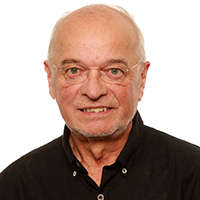 Karsten Høgh Jensen
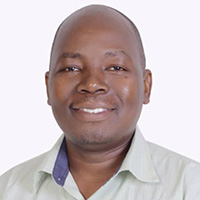 Silver James Birungi
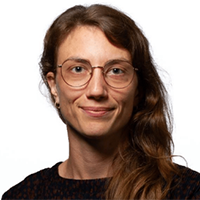 Elisa Bjerre
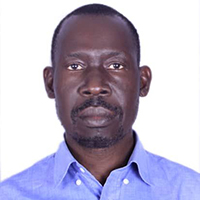 Simon Etimu
 Robert Kajobe
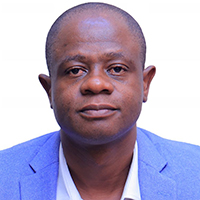 Godfrey Katumba
 Sandra Langi
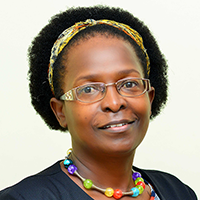 Florence Kyoheirwe Muhanguzi
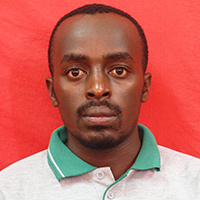 Hillary Nabaasa
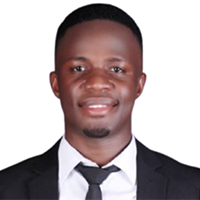 Emmanuel Hyeroba Nabala
 Clement Akais Okiais
 Philip Isaac Omwene
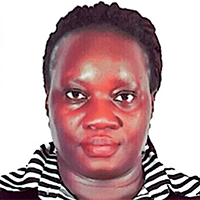 Brenda Piloya
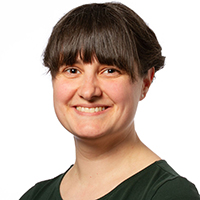 Ida Karlsson Seidenfaden
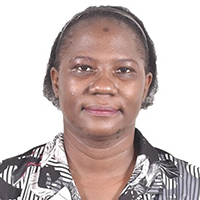 Faridah Sendagire
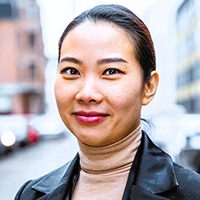 Sirilak Wichayaruangrom