
DEADWOOD-DIST
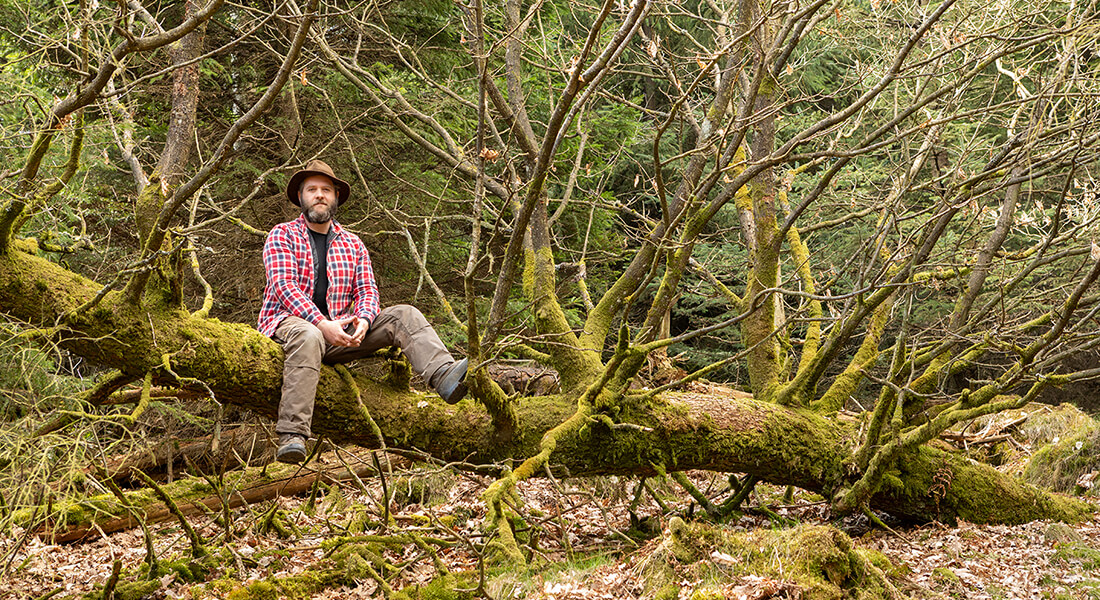
When trees are blown down by a storm, they are often removed. But what happens if they are left where they fall? DEADWOOD-DIST investigates how dead trees on the forest floor influence the new forest that establishes afterwards. In particular, the project examines whether the distance to deadwood affects where new trees establish and how well they grow.
The project studies forest recovery following the 1999 windthrow event in a Danish Norway spruce plantation, where deadwood was left in some areas and removed from others. At the same time, a new experiment is being established in Lovrup Forest in southern Jutland. The goal is to translate the findings into practical recommendations for restoring and managing forests after windthrow and other disturbances.
Forests are increasingly exposed to storms, drought, pest outbreaks, and other disturbances associated with climate change. Deadwood, in the form of trees left behind after such events, is an important component of forest ecosystems. Despite its ecological importance, we still know surprisingly little about how the spatial distribution of deadwood influences forest recovery following disturbance.
DEADWOOD-DIST investigates how the distance between deadwood and young trees affects natural regeneration, tree growth, biodiversity, and forest resilience. Rather than focusing solely on the amount of deadwood present, the project goes a step further by examining whether its location creates particularly favourable conditions for the establishment and development of young trees, as well as the long-term recovery of forest ecosystems.
The research combines studies in existing long-term restoration experiments with new field experiments in Denmark. Using a long-term forest restoration experiment, we are investigating the recovery of a Norway spruce plantation following a major windthrow event in 1999. In part of the area, the fallen trees were left on the forest floor, while they were removed from other sections. This makes the site a unique opportunity to study how forests develop over time under different post-disturbance treatments and conditions.
As part of the project, a new experiment will be established at Lovrup Forest in southern Jutland. Logs will be placed within a designated study area, and young trees will be planted at varying distances from them. This will allow us to investigate how deadwood influences tree growth in a controlled setting designed to simulate a simplified windthrow event. The experiment is being developed in collaboration with the Danish Nature Agency and researchers from University of Copenhagen and will continue to be monitored beyond the project period.
The aim is to identify where deadwood provides the greatest ecological benefits and translate this knowledge into practical guidance for future forest management. The findings will contribute to climate-smart forestry by supporting forests that promote biodiversity, enhance carbon storage, and are more resilient to climate change.
The project is organised into five interconnected work packages:
WP1 – Preparation and co-design
The experimental design and monitoring approach are developed in collaboration with the Danish Nature Agency to ensure scientific quality and management relevance.
WP2 – Pilot establishment
Permanent restoration pilot plots are established, including standardised deadwood placement and tree planting at defined distances from logs.
WP3 – Baseline measurements
Data are collected on tree establishment, growth, biodiversity, soil and climate conditions, deadwood characteristics and other Climate-Smart Forestry indicators to create a baseline for long-term monitoring.
WP4 – Engagement and communication
Experimental set-up is codesigned with the Danish Nature Agency, while MSc students from University of Copenhagen participate in developing monitoring methods suitable for citizen science. Installations in the forest will disseminate results and project aims, while engaging visitors in the experiments. Project results are shared with practitioners and the wider public.
WP5 – Data management and reporting
All project data, protocols and documentation are curated and made openly available through the ForestWard Observatory to support future research and forest restoration initiatives.
The project is led by the Department of Geosciences and Natural Resource Management at the University of Copenhagen.
The Danish Nature Agency (Naturstyrelsen) is a primary partner. They contribute with the location of the experiment and co-design of the experimental restoration pilot, ensuring that the research addresses real management challenges and produces results that can be applied in practice.
The project also involves MSc students in Forest and Nature Management, who contribute to developing accessible monitoring methods that can support future citizen science activities.
The project forms part of the European FORWARDS initiative, supporting knowledge exchange and forest restoration efforts across Europe.
Project outputs will include open datasets, field protocols, technical reports and peer-reviewed scientific publications. All baseline data generated through the project will be made openly available through the ForestWard Observatory to support future research and long-term monitoring.
Scientific publications will focus on how the spatial relationship between deadwood and regenerating trees influences forest recovery, biodiversity and Climate-Smart Forestry. Additional outputs will include presentations at scientific conferences, stakeholder workshops and outreach activities aimed at forest managers, students and the wider public.
A list of publications and other project outputs will be updated as results become available.
Researchers
| Name | Title | Phone | |
|---|---|---|---|
| Johannes H.C. de Koning | Assistant Professor | +4593850502 | |
| Marie Haase | Academic Research Officer | +4535327611 |

DEADWOOD-DIST has received a one year funding from the European Union
Grant number: 101084481
Period: 1 May 2026 to 30 April 2027
Contact
Johannes H.C. de Koning
Assistant Professor
Forest and Bioresources
E-mail: jhc@ign.ku.dk
Phone: +45 93 85 05 02