
Silviculture, Trees and Bioresources
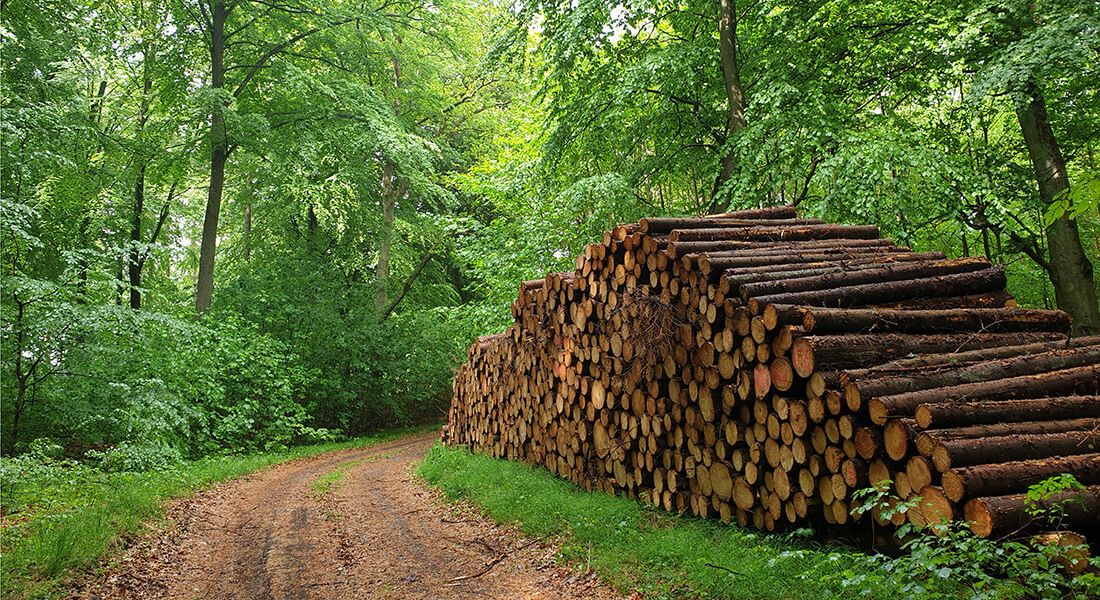
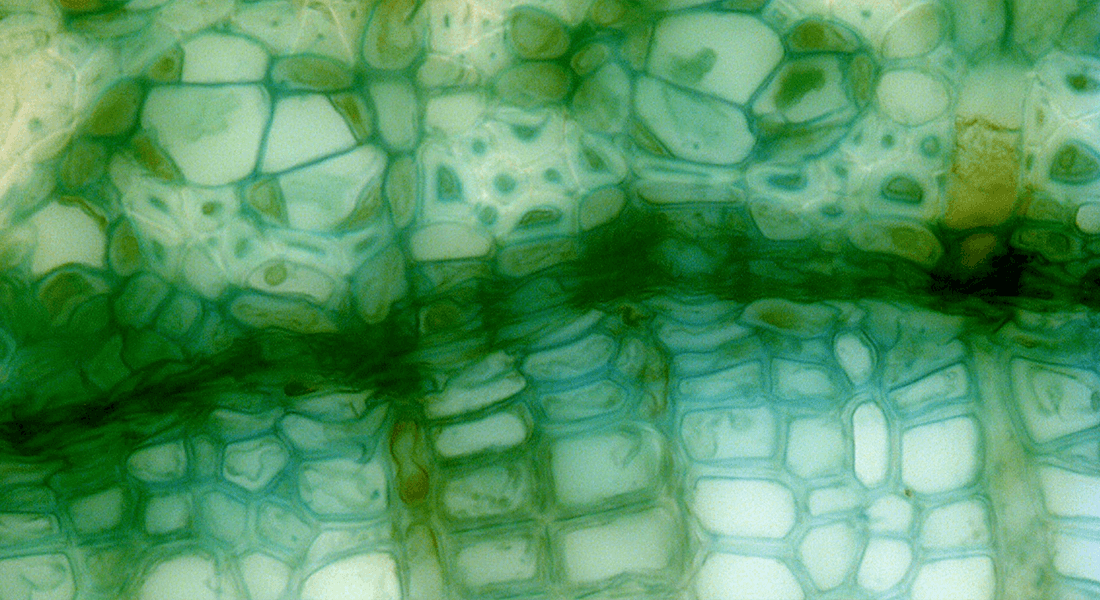
The research group links research on individual trees with forest ecosystems, landscapes and bioresource value chains.
We combine long-term field experiments, national forest monitoring, remote sensing and system analysis to understand forest growth, health, carbon dynamics, biodiversity and resource use.
Our work spans fundamental and applied research, research-based public-sector services and education.
Current priorities are climate adaptation and mitigation, close-to-nature silviculture, forest recovery, robust monitoring methods, sustainable wood use and circular bioeconomy.
The group works with public authorities, forest managers, universities, research networks and industry in Denmark and internationally.
- Silviculture and forest management, including mixed-species and uneven-aged systems
- Climate-change mitigation and adaptation in trees and forests
- Forest recovery, restoration, health and biodiversity
- Long-term monitoring of productivity, carbon stocks and biodiversity indicators
- Remote sensing, LiDAR, machine learning and forest-resource mapping
- Tree biology, dendroecology, wood properties and sustainable use of bioresources
- Forest and wood-resource system analysis, governance and circular bioeconomy
- OptiCForest (2026-2028): Optimizing climate change mitigation of afforestation on agricultural land
- DEADWOOD-DIST (2026-2027): Investigating how the distance from deadwood influences tree regeneration, growth and key Climate-Smart Forestry indicators
- INNO4EST (2022–2026): innovative forests for climate mitigation while integrating biodiversity, nutrient retention and recreation
- National Forest Inventory: ongoing monitoring of forest resources, condition, carbon and other indicators
- Long-term field experiments: evidence on forest growth, management and ecosystem development
- Remote sensing of forest resources: maps combining field observations, LiDAR, satellite data and machine learning
- Oak in future Danish forests (2023–2026)
- GeckoCir (2022–2026): green and circular innovation for Kenyan companies
- Forest health research: Cryphalus abietis, Neonectria, Heterobasidion and bark ecology
Thematic Course
Ecology and Management of Forests and other Semi-natural Ecosystems (MSc, 2026/2027).
The course connects systems ecology, restoration ecology and management through lectures, cases and excursions.
Students analyse ecosystem structure and processes, evaluate degradation and restoration, and develop management strategies.
Within IGN: collaboration on biogeochemistry, biodiversity, restoration, forest genetics, tropical landscapes, geospatial methods and bioresource technology
INFOBIOM – Nordic network for integrated forest resource and biodiversity monitoring
European National Forest Inventory Network
CARISMA - Center of Advanced Research for the innovative use of 3D remote sensing in mapping of forest and landscape attributes based on national forest inventories.
IUFRO – International Union of Forest Research Organisations
Authorities, forest owners, managers, universities, technology partners and industry
Brownell, H., Merriman, N. M. & Nord-Larsen, T. (2026). From parametric models to machine learning: Predicting tree height from national forest inventory data. Forest Ecology and Management, 608, 123594.
Li, S. et al., including Nord-Larsen, T. (2026). Deep learning tree and forest biomass from sub-meter resolution optical imagery. Remote Sensing of Environment, 345, 115539.
Morsing, J. et al., including Raulund-Rasmussen, K. (2026). Multi-taxon biodiversity response to restoration of the riparian zone in coniferous plantation forest. Ecological Engineering, 227, 107969.
Skov, S., Bühler, O. & Thomsen, I. M. (2026). Naturinspireret grenkapning: Skånsom beskæring af store grene. Videnblade Skov og Natur 09.06-23.
Thomsen, I. M., Hedelund, H. M. & Hedelund, J. M. (2026). Naturplejehunde: terrængående sensorer. Videnblade Skov og Natur 09.06-22.
Internal researchers
This content is temporarily unavailable because the system it is fetched from cannot be reached. The rest of the site works as usual.
Status is available on the operating status page.
Head of Research Group
 |
Annemarie Bastrup-Birk Senior Researcher ambb@ign.ku.dk +45 35 32 89 36 |